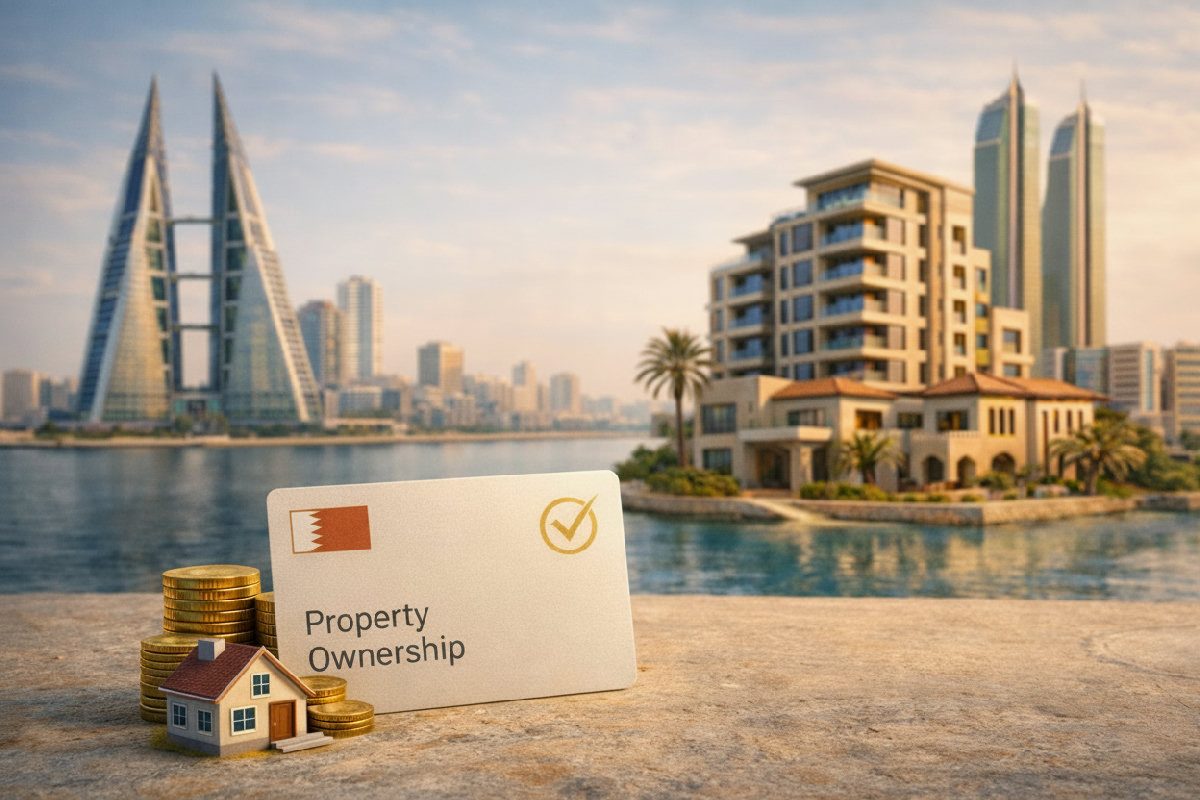
Bahrain Residency by Investment (Property Owner Route): A Step-by-Step Guide (With Real-World Pitfalls)
Bahrain has one of the clearest "residency through property ownership" pathways in the GCC - but most people only discover the practical bottlenecks after they arrive.
This guide explains the process in plain English: what the government asks for, what typically slows people down, and how to plan your timeline so you don't get stuck in "chicken-and-egg" loops (banking, utilities, dependents, document attestation).
Important: Bahrain has more than one residency route (including Golden Residency). This article focuses on the Self-Sponsorship Residence Permit for foreigners who own property in Bahrain.
Who this residency route is for
This permit is commonly used by:
- Property owners (foreign nationals) who want to live in Bahrain on a self-sponsored basis
- Remote workers / business owners who don't need a Bahraini employer sponsor
- Retirees (in some cases)
It is issued for 2, 5, or 10 years under the self-sponsorship category for property owners.
Key eligibility requirements (what the government actually asks for)
Based on the official service listing, typical required items include:
- Passport copy (passport valid > 6 months)
- Electricity bill copy (yes, this matters)
- Certified copy of ownership title deed showing property value not less than 50,000 BHD
- Valid Bahrain-issued medical insurance certificate
- Evidence of stable income of 500 BHD or more
- Recent bank statement(s)
- Certificate of good conduct
(Authorities may request additional documents.)
Step 1: Enter Bahrain and plan your timeline realistically
Many people start on a visit visa and then transition after they purchase and register property.
The important part is not "speed" - it's sequence:
- Enter Bahrain
- Choose the right property (freehold / eligible)
- Purchase + notarize
- Register title
- Put utilities in your name (often the hidden bottleneck)
- Insurance + application
Step 2: Choose a residency-eligible property (don't assume every listing qualifies)
For residency-by-property, the key is that your ownership documentation must meet the required threshold (50,000 BHD) and be properly registered/title-deeded.
Practical tip: If you're buying in a building or from a developer, make sure you understand:
- Timeline to issue title deed / ownership documentation
- Whether the building's utilities can be transferred quickly
- Whether the seller/developer has a clean process for handover documents
Step 3: Sign a strong sale agreement (don't use a "light" contract)
A common real-world issue: sale agreements can be shorter than what foreign buyers expect.
This is where a good lawyer helps (especially for:
- Payment terms
- Handover date + penalties
- Defect liability / snagging
- Title issuance timing
- What happens if a party delays)
Step 4: Pay safely as a foreign buyer (banking can be a constraint)
Many foreign buyers discover that local banking is easier after residency/CPR, but property purchase happens before that.
Two common approaches:
- Buy from a developer with a well-documented payment process
- Use a bank route that allows clean proof of payment and traceable documentation
Whatever method you use, make sure you keep:
- Signed agreements
- Receipts / transfer confirmations
- Any developer payment schedules
- Notarized paperwork
Step 5: Register the property correctly (and save money on fees)
Bahrain's SLRB registration fee is:
- 1.7% of property value if the registration application is submitted within 60 days of notarization
- 2% if submitted after 60 days
This is one of the simplest "optimization wins" in the whole process: don't miss the 60-day window.
Step 6: Get the electricity account in your name (the hidden gate)
The self-sponsorship permit requirements explicitly include a copy of the electricity bill. That's why utilities become a practical bottleneck.
EWA supports booking appointments via Skiplino (app-based booking and appointment flow). And EWA's move-in / transfer process typically asks for supporting documents like title deed / sale agreement (and other items depending on the case).
What to do:
- Start the EWA transfer early
- Book through Skiplino
- Be persistent and methodical with document uploads/requirements
Step 7: Buy Bahrain-issued medical insurance (required)
For this residency route, the government requires a valid medical insurance certificate issued in Bahrain. Many applicants go "bare bones" just to satisfy compliance, then upgrade later if needed.
Step 8: Submit the self-sponsorship application (fees + timing)
Official fees listed include:
- 5 BHD non-refundable application fee
- 200 BHD (2 years)
- 400 BHD (5 years)
- 600 BHD (10 years)
- 250 BHD visa transfer fees
Official processing time listed: 40 working days.
Common roadblocks (and how to avoid them)
1) "Utilities first" problem
If you wait until the end to transfer EWA, your application can stall. Start this immediately after purchase/title steps.
2) Underestimating document precision
Small differences (names, passport formats, marriage certificate naming conventions) can trigger delays. Keep all docs consistent.
3) Assuming one permit = all rights
Different permits have different rights/limits. Always confirm the conditions of the exact category you're applying under.
How WealthWalls fits (without hype)
At WealthWalls, we structure listings so investors can quickly identify:
- Residency-relevant properties (where applicable)
- Clear ownership + handover documentation expectations
- Total cost clarity (including major fee checkpoints like registration)
The goal is simple: reduce surprises before you commit capital.
Frequently Asked Questions
What is the minimum property value for Bahrain residency by investment?
For the self-sponsorship residence permit (property owner route), the government lists a requirement of a certified ownership title deed with a property value not less than 50,000 BHD.
What documents are required for Bahrain's self-sponsorship residence permit (property owners)?
Common requirements include passport copy, certificate of good conduct, electricity bill copy, certified title deed meeting the minimum value, Bahrain-issued medical insurance, proof of stable income, and bank statements.
Do I need an electricity bill (EWA) for the residency application?
Yes - the official requirements include a clear copy of the electricity bill as part of the application.
How much are the fees for Bahrain's self-sponsorship residence permit?
The official listing shows an application fee (5 BHD), and issuance fees of 200 BHD (2 years), 400 BHD (5 years), 600 BHD (10 years), plus visa transfer fees (250 BHD).
How long does the self-sponsorship residence permit take in Bahrain?
The official service listing shows a processing time of 40 working days.
What is the property registration fee in Bahrain?
SLRB fees are 1.7% if the registration application is submitted within 60 days of notarization, and 2% if submitted after 60 days.
Do I need Bahrain-issued health insurance to apply?
Yes - the requirements include a valid medical insurance certificate issued in Bahrain.
Explore Further
Ready to explore residency-eligible properties?
Browse Bahrain property listings on WealthWalls with structured information, transparent fee visibility where available, and clearly marked residency-eligible indicators.
The information provided in this article is for general informational purposes only and does not constitute professional financial, legal, or investment advice.